|
|
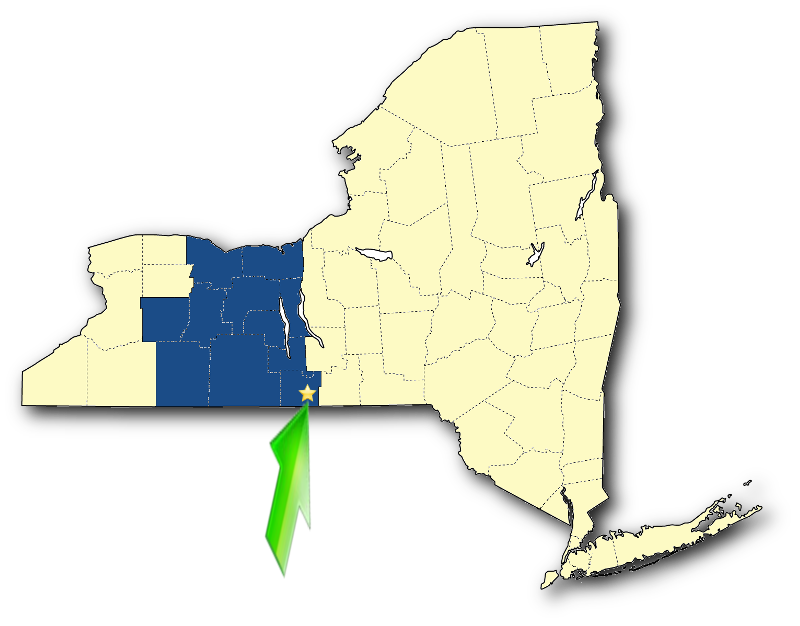
says that global warming will not have much affect on this. There is ice now in Greenland and Canada. We also learned that glacial periods occur in dry times. We saw a slide of where we are now, at the southern end of the Finger Lakes, and how it was likely viewed thousands of years ago. In the foreground was a mastodon. The big game that roam Africa were here as well. North America was a different place 15,000 years ago. We don't know why the huge animals are gone; possibly human hunting. It's one of the questions the paleontologists would like to answer. Mastodons are distant relatives of the elephant. Mammoths are probably closer relatives to the modern elephant. Mastodons are special in NYS, specimens first identified by a Frenchman in 1800. NYS is the birthplace of mastodon study. The Cornell/Gilbert Mastodon skeleton was excavated from a pond south of Watkins Glen, in Chemung County in Sept.'99. The skeleton was acquired by Cornell and moved to PRI the following Dec. The bones, 12-14,000 years old, consist of 65% mastodon skeleton and about 25% mammoth. This find is the first time that a mastodon and a mammoth have been found together in NYS. The differentiation was determined by the teeth, hyoid bones, and the vertebrae. The mastodon likely chewed softer vegetation than the mammoth, leaving its teeth more elongated and sharper edged. The Hyde Park Mastodon was excavated by PRI in Dutchess county in Aug. 2000. The following Oct. it was moved to PRI. This skeleton is more than 95% complete. It is one of the best preserved and most complete ever found anywhere. This skeleton is approx.11,500 years old. The North Java mastodon is a partial skeleton excavated in June 2001 in Wyoming County, between Rochester and Buffalo. This 10% "smaller" skeleton, possibly a female, was heavily damaged by scavenging and weathering before its final burial. Only about 20% of the skeleton was recovered. Warren also mentioned the Mastodon Mud Project, where tons of mud have been brought back from the excavations, bagged in 5#lots, and sent out to students and interested people around the world to examine. Some 80,000 people examined material during Part 1of the project. The resulting sorted contents are being returned and processed. Warren stressed that mastodon bones are not rare. Once every hour a portion of a mastodon is found! He guaranteed that someone in the room has such a skeleton in his/her backyard. He said that if you find a pond in a rural area, get a backhoe and dig; you will find one. The map we were shown featured areas of major skeletal findings. There were clusters in Orange County. Warren attributes this to the boggy soil, providing greater burial and good preservation.
Thanks, Warren for a great program. You sure kept our attention.
|
|